

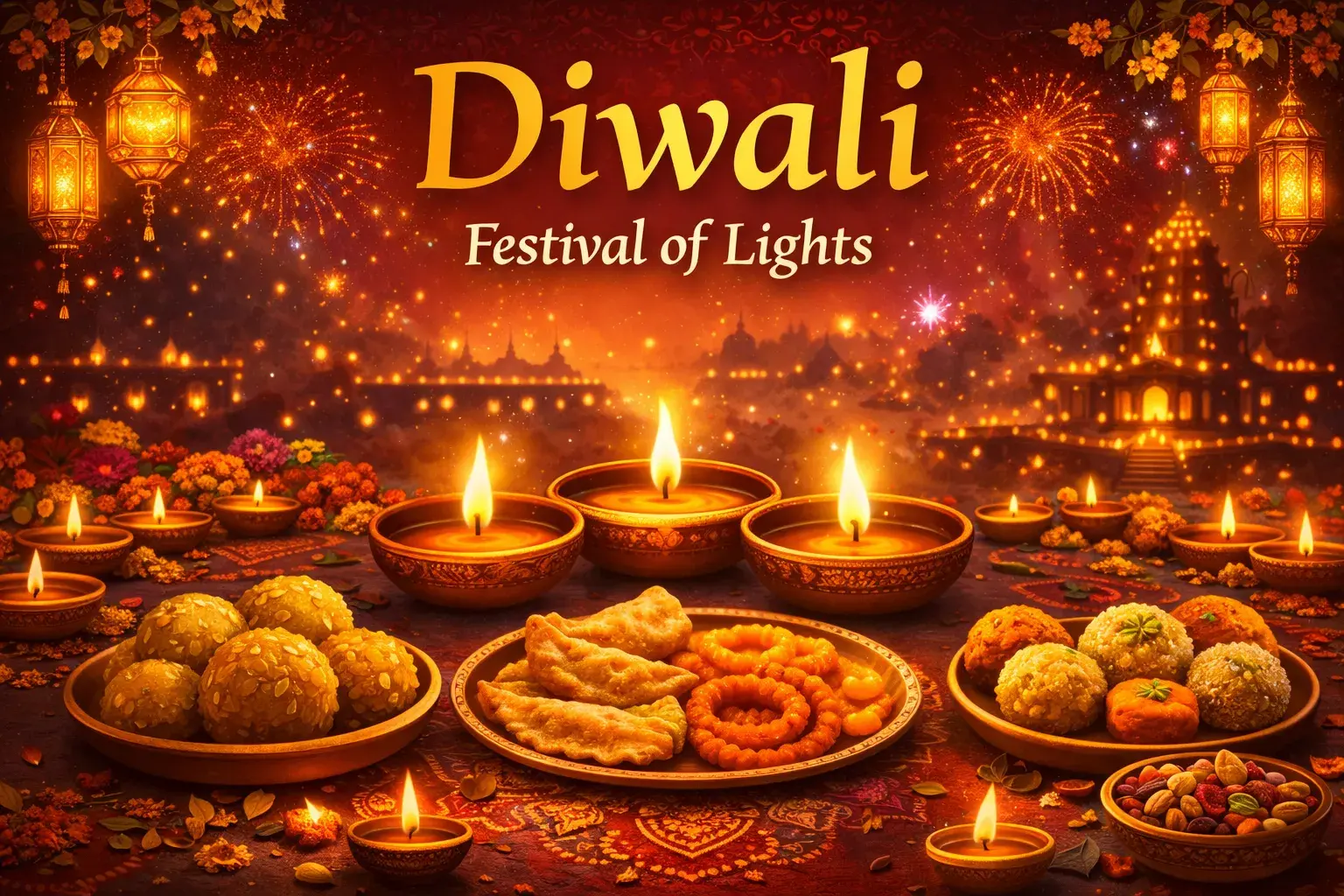
It falls on the new moon (amāvasyā) of the Hindu lunar month of Kartik, which means it typically falls in either late October or early November depending on the year. The exact date changes annually, as it is based on the lunar calendar.
Dhanteras marks the beginning or first day of the Diwali celebration.
Diwali, also known as Deepavali, is one of the most widely celebrated festivals in India and among Hindus worldwide. The festival usually spans over five days, and each day has its own significance and rituals. The exact dates of Diwali may vary each year as it is determined by the Hindu lunar calendar.
Diwali is a time of joy and togetherness. People exchange gifts, visit friends and family, and share festive meals. Homes are decorated with colorful rangoli (artistic designs made on the ground with colored powders), and the atmosphere is filled with the sound of crackers and fireworks.
People clean and decorate their homes and purchase new items, especially gold or silver, as it is considered full of promise.
The word “Dhan” refers to wealth, and “Teras” means the thirteenth day of the lunar fortnight.
Dhanteras, or Dhanatrayodashi, is not only associated with wealth but also holds significance in the context of health and well-being. It is believed that on this day, Dhanvantari, the Hindu god of medicine and health, emerged during the churning of the ocean (Samudra Manthan) with a pot of amrita (nectar), symbolizing the source of Ayurveda and healing.
Naraka Chaturdashi, is the second day of the Diwali festival. Commonly recognized as Choti Diwali or Kali Chaudas, holds cultural significance on the second day. Rooted in Hindu mythology, this day marks the triumphant victory of Lord Krishna over the malevolent demon Narakasura. The celebration extends beyond the mythological narrative, intertwining spirituality and cultural practices.
In observance of this day, individuals engage in ritualistic oil baths, a symbolic act of purification that extends beyond the physical realm, emphasizing the cleansing of the mind and spirit.
The ritual aligns with the broader Diwali festival, a period of spiritual reflection, renewed commitments, and the triumph of light over darkness. As families come together to share in the festivities, the cultural tapestry woven through the observance of Naraka Chaturdashi serves as a reminder of the rich traditions that continue to be cherished and passed down through generations.
Lakshmi Puja marks the third day is the pinnacle of the Diwali celebration.
This day takes center stage and is dedicated to the veneration of Goddess Lakshmi, the embodiment of wealth and prosperity in Hindu tradition. The atmosphere is blazine with the glow of oil lamps (diyas) and candles, a luminous tribute symbolizing the resounding triumph of light over darkness and the eternal victory of good over evil.
In a spectacular display, fireworks paint the night sky, underscoring the profound significance of Diwali as the grand culmination of the festival. This symbolic illumination not only resonates with the mythology surrounding the festival but also serves as a collective expression of joy and jubilation.
Communities come together to revel in the brilliance of light, the fervor of Diwali reaches its zenith, making it the most significant and dazzling day in the entire celebration, resonating with cultural richness and spiritual splendor.
Govardhan Puja (Annakut), is the fourth day of the Diwali celetration.
This day commemorates the lifting of the Govardhan Hill by Lord Krishna to protect the people of Vrindavan from the wrath of Lord Indra.
Devotees create a small mountain of food, known as Annakut, as an offering to God. In some communities, Day 4 of Diwali is referred to as “Padava,” and it includes celebrations related to husband-wife relationships, gift exchanges, and it adds a unique and meaningful dimension to the overall Diwali festivities. Diwali traditions can indeed vary across regions and communities, and the names and specific rituals associated with each day may differ. The diversity of celebrations during Diwali reflects the richness of cultural practices in different parts of India and among various communities.
Bhai Dooj, is the fifth and final day of the Diwali celebration.
It is also recognized as Yamadwitheya or Bhai Tika in various regions, unveiling a rich tapestry of cultural heritage. This celebration is a poignant testament to the enduring bond between brothers and sisters, a relationship revered in the heart of Indian culture.
During Bhai Dooj, sisters embark on a heartfelt ritual, adorning their brothers’ foreheads with a tilak, a mark of vermilion. This gesture goes beyond symbolism, echoing the profound cultural values of love, protection, and sibling camaraderie.
Sisters further show their affection through the performance of aarti, a ceremonial worship, and heartfelt prayers for the well-being and prosperity of their brothers. As this tradition unfolds, it weaves a narrative deeply ingrained in the cultural fabric, showcasing the significance of familial ties and the enduring essence of shared heritage across diverse regions and communities.